

Hey there! As a bearings supplier, I've seen firsthand how crucial it is to detect bearing vibration accurately. In this blog, I'll share some practical tips on how to do just that.
Why Detect Bearing Vibration?
Before we dive into the detection methods, let's understand why it's so important to keep an eye on bearing vibration. Bearings are the unsung heroes of many machines. They support rotating shafts and reduce friction, allowing machinery to operate smoothly. However, over time, bearings can wear out, develop cracks, or get contaminated. These issues can lead to increased vibration, which, if left unchecked, can cause further damage to the machine, reduce its lifespan, and even result in costly breakdowns.

Basic Tools for Vibration Detection
- Vibration Sensors: These are the most common tools for detecting bearing vibration. There are different types of vibration sensors, such as accelerometers. Accelerometers measure the acceleration of the bearing's vibration. They can be attached directly to the bearing housing or a nearby structure. The sensor converts the mechanical vibration into an electrical signal, which can then be analyzed.
- Vibration Meters: A vibration meter is a handy device that can quickly give you a reading of the vibration level. It's usually portable and easy to use. You simply place the meter on the bearing housing, and it will display the vibration amplitude. This is a great way to get a quick snapshot of the bearing's condition.
Detection Methods
- Visual Inspection: This might seem basic, but it's a great starting point. Before using any fancy equipment, take a good look at the bearing. Look for signs of wear, such as discoloration, scratches, or pitting on the bearing surfaces. Check if the bearing is properly lubricated. A lack of lubrication can cause increased friction and vibration. Also, make sure the bearing is securely mounted. Loose bearings can vibrate excessively.
- Auditory Inspection: Believe it or not, you can sometimes detect bearing problems just by listening. A healthy bearing should run quietly. If you hear any unusual noises, like grinding, squealing, or rattling, it could be a sign of a problem. You can use a stethoscope to get a better listen. Place the stethoscope on the bearing housing and listen carefully. This method might not give you a precise diagnosis, but it can alert you to potential issues.
- Vibration Analysis: This is where the more technical part comes in. Once you've collected the vibration data using sensors or meters, you need to analyze it. There are different ways to do this.
- Time - Domain Analysis: In this method, you look at the raw vibration signal over time. You can measure the peak amplitude, which is the maximum value of the vibration. A sudden increase in the peak amplitude could indicate a serious problem, like a cracked bearing. You can also calculate the root - mean - square (RMS) value of the vibration. The RMS value gives you an idea of the average energy of the vibration. An increasing RMS value over time can suggest that the bearing is deteriorating.
- Frequency - Domain Analysis: This involves converting the time - domain signal into the frequency domain using a technique called the Fast Fourier Transform (FFT). In the frequency domain, you can identify specific frequencies associated with different types of bearing faults. For example, a defect in the inner race of a bearing will produce a characteristic frequency. By analyzing the frequency spectrum, you can pinpoint the source of the problem more accurately.
Application - Specific Considerations
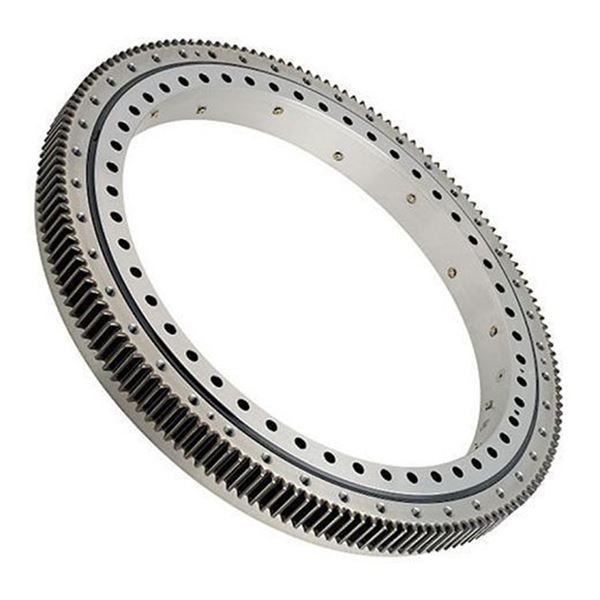
- Excavator Slewing Bearings: Excavators are heavy - duty machines that operate in tough environments. The Excavator Slewing Bearings are subjected to high loads and constant rotation. When detecting vibration in these bearings, you need to consider the harsh operating conditions. Dust, dirt, and moisture can all affect the bearing's performance. Make sure the vibration sensors are properly protected from these elements. Also, due to the large size and heavy load of excavator slewing bearings, the vibration levels might be naturally higher than in smaller bearings. You need to establish a baseline vibration level for normal operation and compare your readings against it.
- Tower Crane Slewing Bearings: Tower cranes are used in construction projects, and their Tower Crane Slewing Bearings play a critical role in the crane's rotation. These bearings are often exposed to wind, which can cause additional vibration. When detecting vibration in tower crane slewing bearings, you need to take into account the wind conditions. You might need to install multiple sensors at different locations on the bearing to get a more accurate picture of the vibration. Also, regular inspections are crucial because any failure in these bearings can have serious safety implications.
Tips for Accurate Detection
- Calibration: Make sure your vibration sensors and meters are properly calibrated. An uncalibrated device can give inaccurate readings, which can lead to misdiagnosis. Follow the manufacturer's instructions for calibration, and do it regularly.
- Consistent Measurement Location: Always measure the vibration at the same location on the bearing housing. Different locations can have different vibration characteristics, so consistent measurement is essential for accurate comparison over time.
- Data Logging: Keep a record of your vibration measurements. This will help you track the bearing's condition over time and identify any trends. You can use software to store and analyze the data more efficiently.
Conclusion
Detecting bearing vibration is a vital part of maintaining the health of your machinery. By using the right tools and methods, you can catch bearing problems early and prevent costly breakdowns. Whether you're dealing with Excavator Slewing Bearings or Tower Crane Slewing Bearings, a proactive approach to vibration detection can save you time and money in the long run.
If you're in the market for high - quality bearings or need more advice on bearing vibration detection, don't hesitate to reach out. We're here to help you find the best solutions for your specific needs.
References
- Harris, T. A., & Kotzalas, M. N. (2007). Rolling Bearing Analysis. Wiley.
- Randall, R. B., & Antoni, J. (2011). Rolling element bearing diagnostics - A tutorial. Mechanical Systems and Signal Processing, 25(2), 485 - 520.


