

Hey there! I'm a bearings supplier, and today I wanna chat about the requirements for bearings in high - speed spindles. High - speed spindles are used in all sorts of industries, like aerospace, automotive, and precision machining. They need bearings that can handle the heat, speed, and precision demands. So, let's dig into what these requirements are.
1. High - Speed Capability
The most obvious requirement for bearings in high - speed spindles is, well, the ability to spin at high speeds. When a spindle is rotating at thousands of revolutions per minute (RPM), the bearings need to keep up without generating excessive heat or wearing out too quickly.
One of the key factors here is the bearing's design. Ball bearings are often used in high - speed spindles because they have less friction compared to other types of bearings. The balls can roll smoothly, reducing the amount of energy lost as heat. For example, angular contact ball bearings are great for high - speed applications. They can handle both radial and axial loads, which is important in spindles that may experience forces from different directions.
Another aspect is the material of the bearing. High - quality steel alloys are commonly used because they can withstand the high stresses and temperatures associated with high - speed rotation. Some advanced bearings even use ceramic balls. Ceramic has a lower density than steel, which means less centrifugal force at high speeds. This results in less wear on the bearing races and can extend the bearing's lifespan.
2. Precision and Accuracy
Precision is crucial in high - speed spindles. Even the slightest misalignment or deviation can lead to poor machining quality, vibration, and premature bearing failure.
Bearings for high - speed spindles need to have extremely tight tolerances. The roundness, surface finish, and dimensional accuracy of the bearing components must be within very narrow limits. For instance, the raceways of the bearing should be as smooth as possible to minimize friction and ensure consistent performance.
Manufacturers use advanced machining and grinding techniques to achieve the required precision. They also conduct rigorous quality control checks to make sure each bearing meets the strict standards. A high - precision bearing will help the spindle maintain its accuracy during high - speed operation, which is essential for producing high - quality parts.
3. Rigidity
Rigidity is another important requirement. High - speed spindles need to be able to resist deformation under load. If the bearings are not rigid enough, the spindle may deflect, leading to inaccuracies in machining and reduced tool life.
The rigidity of a bearing depends on its design and the materials used. Bearings with a larger contact angle or more balls generally have higher rigidity. For example, double - row angular contact ball bearings offer greater rigidity compared to single - row ones. Also, using high - strength materials can enhance the bearing's ability to withstand loads without deforming.
4. Lubrication
Proper lubrication is a must for bearings in high - speed spindles. Lubrication serves several purposes. It reduces friction between the bearing components, which in turn reduces heat generation. It also helps to prevent wear and corrosion, and it can act as a coolant to dissipate heat.
There are different types of lubricants available, such as grease and oil. Grease lubrication is often used in smaller, less - demanding high - speed applications because it's easy to apply and requires less maintenance. However, for very high - speed spindles, oil lubrication is usually preferred. Oil can provide better cooling and can be delivered more precisely to the bearing surfaces.
There are also different methods of oil lubrication, like oil - mist lubrication and oil - jet lubrication. Oil - mist lubrication involves creating a fine mist of oil that is delivered to the bearing. This method is efficient and can provide good lubrication at high speeds. Oil - jet lubrication, on the other hand, uses a high - pressure jet of oil to directly lubricate the bearing. It's more suitable for extremely high - speed and high - load applications.
5. Low Vibration and Noise
High - speed spindles need to operate quietly and with minimal vibration. Excessive vibration can cause poor surface finish on the machined parts, reduce tool life, and even damage the spindle itself. Noise is also a concern, especially in manufacturing environments where operators need to work in a relatively quiet space.
Bearings are designed to minimize vibration and noise. This can be achieved through proper design, such as using optimized ball and raceway geometries. The quality of the manufacturing process also plays a role. Bearings with high - quality surface finishes and tight tolerances will produce less vibration and noise.
6. Compatibility with the Spindle System
Bearings need to be compatible with the overall spindle system. This includes factors like the mounting method, the housing design, and the sealing requirements.
The mounting of the bearing is critical. It needs to be installed correctly to ensure proper alignment and preload. If the bearing is not mounted properly, it can lead to premature failure. The housing design also needs to support the bearing and provide adequate space for lubrication and heat dissipation.
Sealing is important to keep contaminants out of the bearing. High - speed spindles often operate in environments where there may be dust, chips, or coolant. A good seal will protect the bearing from these contaminants, which can cause wear and damage.

Industry - Specific Applications
In different industries, the requirements for bearings in high - speed spindles may vary slightly. For example, in the aerospace industry, where precision and reliability are of utmost importance, bearings need to meet extremely high standards. They may need to be able to operate in harsh environments, such as high altitudes and extreme temperatures.
In the automotive industry, high - speed spindles are used in engine manufacturing and other processes. Bearings here need to be cost - effective while still meeting the performance requirements. They also need to be able to handle the high - volume production demands.
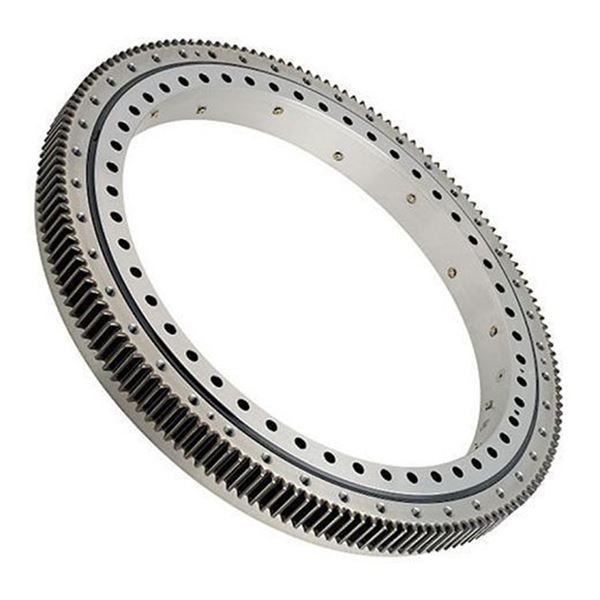
If you're in the construction machinery field, you might be interested in our Excavator Slewing Bearings and Tower Crane Slewing Bearings. These bearings are designed to handle the heavy loads and unique operating conditions of these machines.
Conclusion
So, there you have it! The requirements for bearings in high - speed spindles are pretty complex. High - speed capability, precision, rigidity, lubrication, low vibration and noise, and compatibility with the spindle system are all key factors. As a bearings supplier, I understand the importance of meeting these requirements to ensure the optimal performance of high - speed spindles.
If you're in the market for bearings for your high - speed spindles, I'd love to have a chat with you. Whether you're from a small - scale workshop or a large - scale manufacturing plant, I can help you find the right bearings for your specific needs. Let's get in touch and start a discussion about your bearing requirements!
References
- Harris, T. A., & Kotzalas, M. N. (2007). Rolling Bearing Analysis. Wiley.
- Stachowiak, G. W., & Batchelor, A. W. (2005). Engineering Tribology. Elsevier.


