

Bearing failure can be a significant headache for many industries, from heavy machinery to automotive applications. As a bearings supplier, I've seen firsthand the diverse array of factors that can lead to bearing failure. Understanding these causes is crucial for preventing premature wear and tear, optimizing performance, and reducing maintenance costs. In this blog post, I'll delve into the common culprits behind bearing failure and provide insights on how to mitigate these issues.
1. Lubrication Issues
One of the most prevalent causes of bearing failure is improper lubrication. Bearings rely on a thin film of lubricant to reduce friction between moving parts, dissipate heat, and prevent metal-to-metal contact. Insufficient lubrication can lead to increased friction, which generates excessive heat and accelerates wear. On the other hand, over - lubrication can also be problematic, as it can cause churning losses, leading to overheating and the accumulation of contaminants.
- Insufficient lubrication: This can occur due to various reasons, such as incorrect lubricant selection, improper lubrication intervals, or leaks in the lubrication system. For example, if the lubricant has a viscosity that is too low for the operating conditions of the bearing, it may not form an adequate protective film. Some high - speed bearings require low - viscosity lubricants, but if the load is also high, a lubricant with higher viscosity might be needed.
- Lubricant contamination: Dirt, dust, water, and other contaminants can enter the lubricant, reducing its effectiveness. Contaminants can cause abrasive wear, corrosion, and oxidation of the lubricant itself. For instance, in industrial environments where there is a lot of dust, such as mining operations, the lubricant in bearings can quickly become contaminated if proper sealing measures are not in place.
2. Contamination
Contamination is another major factor contributing to bearing failure. External particles can enter the bearing through various means, such as poor sealing, environmental conditions, or improper handling during installation.
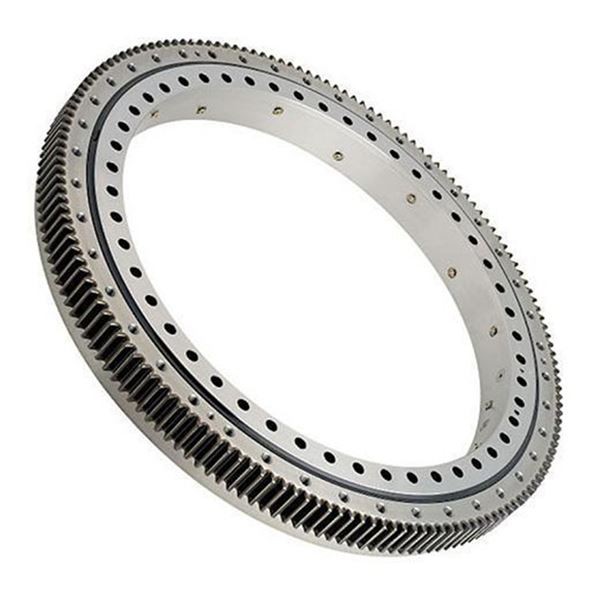

- Solid particles: Dust, sand, metal shavings, and other solid particles can act as abrasives, scratching the bearing surfaces and causing premature wear. In construction equipment like Tower Crane Slewing Bearings, which are often exposed to harsh outdoor environments, solid particle contamination is a common problem. These particles can penetrate the bearing seals and damage the raceways and rolling elements.
- Liquid contamination: Water and other liquids can cause corrosion of the bearing surfaces. Condensation can form inside the bearing housing, especially in environments with high humidity or temperature fluctuations. In the case of marine applications, seawater can also infiltrate the bearings if they are not properly sealed, leading to rapid corrosion and failure.
3. Misalignment
Misalignment occurs when the bearing's inner and outer races are not properly aligned with each other or with the shaft and housing. This can be caused by improper installation, manufacturing errors, or deformation of the shaft or housing over time.
- Angular misalignment: This happens when the axes of the inner and outer races are not parallel. Angular misalignment can increase the load on one side of the bearing, leading to uneven wear and premature failure. For example, in a motor - driven system, if the motor shaft is not properly aligned with the driven shaft, the bearings in both shafts can experience excessive stress due to misalignment.
- Parallel misalignment: When the inner and outer races are offset along their common axis, parallel misalignment occurs. This can cause additional forces and moments on the bearing, reducing its service life. In some industrial machinery where components are assembled on - site, parallel misalignment can easily occur if the alignment procedures are not followed precisely.
4. Overloading
Bearings are designed to operate within specific load limits. If the actual load on the bearing exceeds its rated capacity, it can lead to premature failure.
- Static overloading: This occurs when the bearing is subjected to a constant load that is higher than its static load rating. For example, in a heavy - duty conveyor system, if the conveyor is overloaded with more material than it was designed to carry, the bearings supporting the rollers can experience static overloading. This can cause deformation of the bearing's rolling elements and raceways.
- Dynamic overloading: Dynamic overloading happens when the bearing is exposed to shock or impact loads. In applications such as Excavator Slewing Bearings, the bearings are often subjected to high - impact forces during the digging and lifting operations. If these forces are too large, they can cause cracking, spalling, or other forms of damage to the bearing.
5. Fatigue
Fatigue is a gradual process that occurs due to repeated cyclic loading on the bearing. Over time, the stress cycles can cause microscopic cracks to form on the bearing surfaces, which can then propagate and lead to the detachment of material, known as spalling.
- Surface fatigue: This type of fatigue occurs on the surface of the bearing raceways or rolling elements. It is often caused by high - contact stresses and can be accelerated by factors such as poor lubrication, contamination, and misalignment. Surface fatigue can start as small pits on the surface and gradually grow, eventually causing the bearing to fail.
- Sub - surface fatigue: Sub - surface fatigue initiates below the surface of the bearing material. It is typically caused by the presence of internal stresses and inhomogeneities in the material. As the cracks propagate from the sub - surface to the surface, they can cause spalling and other forms of damage.
Preventing Bearing Failure
To prevent bearing failure, it is essential to take a proactive approach. Here are some recommended practices:
- Proper lubrication management: Select the right lubricant based on the bearing's operating conditions, including speed, load, temperature, and environment. Establish a regular lubrication schedule and ensure that the lubrication system is properly maintained to prevent leaks and contamination.
- Effective sealing: Use high - quality seals to prevent contaminants from entering the bearing. In harsh environments, consider using additional sealing devices or protective covers.
- Accurate installation: Follow the manufacturer's installation instructions carefully to ensure proper alignment and fitting of the bearing. Use appropriate tools and techniques to avoid damage during installation.
- Load monitoring: Monitor the load on the bearings regularly and ensure that it does not exceed the rated capacity. In applications with variable loads, use load - sensing devices to detect overloading conditions in real - time.
- Condition monitoring: Implement a condition - monitoring program that includes vibration analysis, temperature monitoring, and oil analysis. These techniques can help detect early signs of bearing wear and damage, allowing for timely maintenance and replacement.
Conclusion
Bearing failure can have a significant impact on the performance and reliability of industrial equipment. By understanding the common causes of bearing failure, such as lubrication issues, contamination, misalignment, overloading, and fatigue, and implementing appropriate preventive measures, it is possible to extend the service life of bearings and reduce downtime. As a bearings supplier, I am committed to providing high - quality bearings and technical support to help our customers optimize the performance of their equipment. If you are facing bearing - related challenges or are interested in purchasing bearings for your application, please feel free to contact us for a detailed discussion and personalized solutions.
References
- Harris, T. A., & Kotzalas, M. N. (2007). Rolling Bearing Analysis. Wiley.
- Boyer, H. E. (1988). Atlas of Stress - Life Fatigue Curves. American Society for Metals.
- SKF, "Bearing handbook", 2019.
- Timken Engineering Handbook, 2020.


