

Yo, folks! As a bearings supplier, I've seen firsthand the wild impacts that bearing failure can have on production. Let's dive right into this crucial topic and explore how these little components can cause big headaches in the manufacturing and industrial world.
First off, what exactly are bearings? Well, they're essential parts in tons of machinery. They reduce friction between moving parts, let machines spin smoothly, and handle heavy loads. But when they fail, it's like throwing a wrench into the gears of production.
One of the most immediate impacts of bearing failure is downtime. When a bearing gives out, the machine it's in has to stop. And in a production setting, time is money. Every minute that a machine is down means lost production, which can really add up. For example, in a large - scale manufacturing plant, a single machine with a failed bearing could halt an entire production line. This isn't just a few minutes of waiting around; it could be hours or even days to get the machine up and running again. You've got to find the right replacement bearing, order it, and then have the maintenance crew install it. And during all this time, the production targets are slipping away.
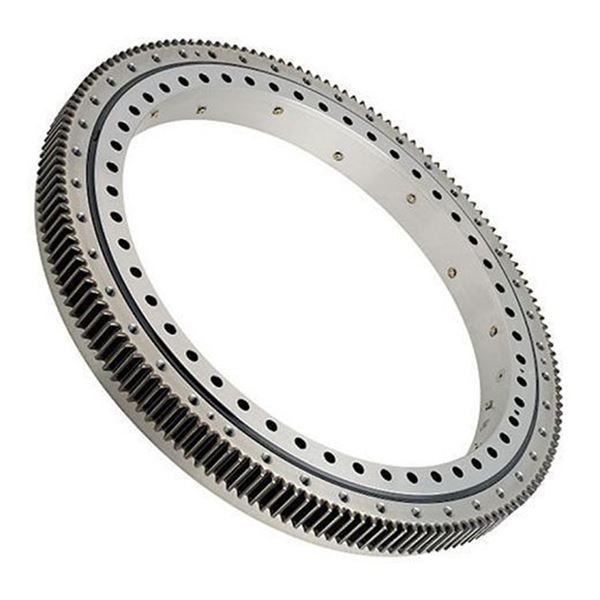
Another major issue is the cost of replacement. Bearings come in all shapes and sizes, and some of them can be pretty pricey. High - performance bearings designed for heavy - duty machinery, like Tower Crane Slewing Bearings and Excavator Slewing Bearings, can cost a small fortune. Not only do you have to pay for the new bearing itself, but there are also labor costs for installation. And if the failure causes damage to other parts of the machine, the repair costs can skyrocket.
Quality control also takes a hit when bearings fail. When a machine isn't running smoothly due to a bad bearing, it can produce sub - standard products. In industries where precision is key, like automotive or aerospace manufacturing, even a slight deviation in product quality can be a huge problem. Faulty products may need to be reworked or scrapped altogether, which again adds to the cost and reduces overall productivity.
Safety is another critical aspect. A failed bearing can cause a machine to malfunction in unpredictable ways. In some cases, it can lead to dangerous situations for workers. For instance, in heavy construction equipment, a sudden bearing failure could cause the equipment to lose stability or control, putting the operator and nearby workers at risk. This not only endangers lives but can also lead to costly lawsuits and damage to a company's reputation.
Now, let's talk about the root causes of bearing failure. One common culprit is improper lubrication. Bearings need the right amount and type of lubricant to work properly. If there's not enough lubrication, the friction between the moving parts increases, generating heat and causing wear and tear. On the other hand, using the wrong type of lubricant can also lead to problems.
Contamination is another big issue. Dust, dirt, and other particles can get into the bearing, causing abrasion and premature failure. In dirty industrial environments, this is a constant battle. Even small amounts of contaminants can cause significant damage over time.
Overloading is yet another factor. If a bearing is subjected to loads that are higher than its design capacity, it will wear out faster. This can happen when machines are pushed beyond their limits, either due to improper operation or changes in production requirements.

So, what can be done to prevent bearing failure? Regular maintenance is key. This includes checking the lubrication levels, inspecting for signs of wear and contamination, and replacing bearings before they fail. Predictive maintenance techniques, like vibration analysis and temperature monitoring, can also help detect early signs of bearing problems.
As a bearings supplier, I'm always here to help my customers choose the right bearings for their applications. We offer a wide range of high - quality bearings, from standard ones to specialized Tower Crane Slewing Bearings and Excavator Slewing Bearings. We also provide technical support and advice on installation and maintenance.
If you're facing issues with bearing failures in your production processes, or if you're looking for reliable bearings for new machinery, don't hesitate to reach out. We can work together to find the best solutions for your needs and keep your production running smoothly.
In conclusion, bearing failure can have far - reaching impacts on production, including downtime, high costs, quality issues, and safety risks. But with proper maintenance and the right choice of bearings, these problems can be minimized. So, take good care of your bearings, and they'll take good care of your production.
References
- "Bearing Technology Handbook" by SKF
- "Machinery's Handbook" by Industrial Press Inc.


