

As a supplier of Slip On Flanges, I've witnessed firsthand the diverse demands and preferences of customers when it comes to choosing between domestic and imported options. In this blog, I'll delve into the key differences between domestic and imported Slip On Flanges to help you make an informed decision for your projects.
1. Standards and Specifications
One of the most significant differences between domestic and imported Slip On Flanges lies in their adherence to various standards. Different countries and regions have their own set of standards for flange manufacturing, which govern aspects such as dimensions, pressure ratings, and material properties.
Domestic Slip On Flanges
In many countries, domestic Slip On Flanges are typically manufactured according to national standards. For example, in China, GB Slip-on Flanges are produced in line with the national standard [GB/T XXXX]. These standards are designed to meet the specific requirements and regulations of the domestic market. They ensure that the flanges are compatible with other domestic piping systems and components, making them a popular choice for local projects. The GB Slip-on Flange offers a high level of standardization, which simplifies the selection and installation process for domestic customers.
Imported Slip On Flanges
Imported Slip On Flanges often follow international or foreign standards. Two well - known standards are the ANSI (American National Standards Institute) and DIN (Deutsches Institut für Normung). ANSI Slip On Flanges, as described on the ANSI Slip On Flange page, are widely used in North America and many international projects that follow American engineering practices. They have specific dimensions and pressure - temperature ratings that are different from domestic standards. DIN Slip On Flanges, on the other hand, are popular in Europe and regions influenced by German engineering. The DIN Slip On Flange has its own unique set of specifications, which may be more suitable for projects with European - based design requirements.
2. Material Quality and Sourcing
The quality of materials used in Slip On Flanges can vary significantly between domestic and imported products.
Domestic Slip On Flanges
Domestic suppliers usually source materials locally, which can have several advantages. Local sourcing allows for better control over the supply chain, reducing lead times and potential disruptions. In addition, domestic materials are often tested and certified according to national quality standards. For example, in some countries, domestic steel for flanges is produced in large - scale mills that have strict quality control measures in place. However, the quality of domestic materials can also be affected by the overall development level of the local steel industry. In some less - developed regions, the material quality may not be as consistent as that of imported materials.
Imported Slip On Flanges
Imported Slip On Flanges may use high - quality materials sourced from well - established international suppliers. For instance, some imported flanges are made from premium - grade stainless steel or alloy steels that are known for their superior corrosion resistance and mechanical properties. These materials are often sourced from countries with advanced metallurgical industries, such as Japan, Germany, or the United States. However, the use of imported materials can also lead to higher costs due to factors such as transportation, import duties, and currency exchange rates.
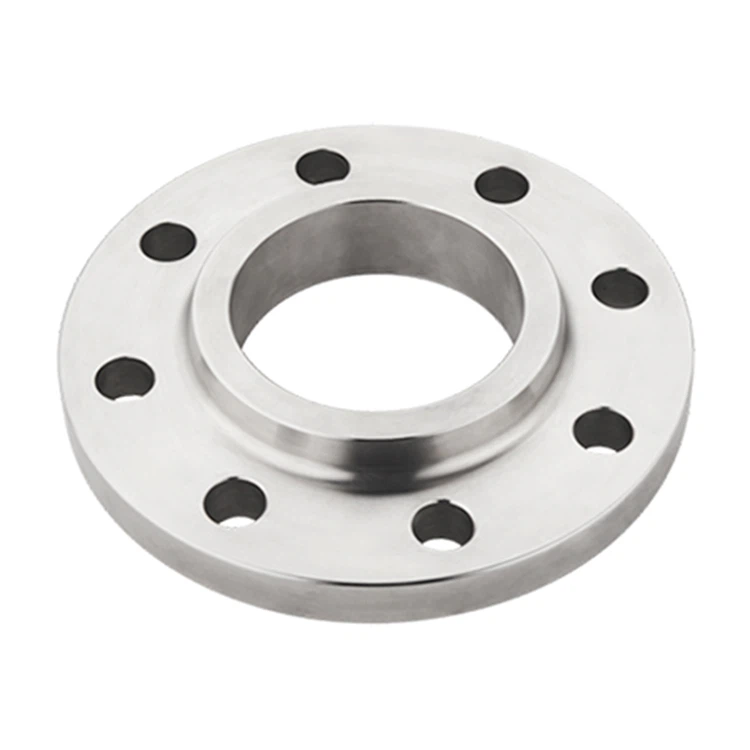

3. Manufacturing Process and Quality Control
The manufacturing process and quality control measures also differ between domestic and imported Slip On Flanges.
Domestic Slip On Flanges
Domestic manufacturers often have a deep understanding of the local market requirements and can adjust their manufacturing processes accordingly. They may use a combination of traditional and modern manufacturing techniques to produce flanges at a competitive cost. In addition, domestic manufacturers are subject to national regulations and quality control inspections. Many domestic factories have their own in - house quality control departments that conduct regular inspections at various stages of the manufacturing process, from raw material inspection to final product testing. However, the overall quality control level can vary among different domestic manufacturers. Smaller or less - experienced factories may not have as rigorous quality control systems as larger, more established ones.
Imported Slip On Flanges
Imported Slip On Flanges are typically manufactured by well - known international companies that have advanced manufacturing facilities and strict quality control protocols. These companies often invest heavily in research and development to improve their manufacturing processes. For example, some imported flanges are produced using state - of - the - art CNC machining and forging techniques, which ensure high precision and consistency in dimensions. Moreover, international manufacturers are usually subject to more comprehensive international quality standards, such as ISO 9001, which further guarantees the quality of their products. However, it can be more difficult for customers to directly monitor the manufacturing process of imported flanges, and in case of quality issues, communication and after - sales service may be more complicated due to factors such as language barriers and different time zones.
4. Price and Cost - effectiveness
Price is an important factor for many customers when choosing between domestic and imported Slip On Flanges.
Domestic Slip On Flanges
Domestic Slip On Flanges generally have a price advantage due to lower production costs, such as labor, raw materials, and overheads. Local manufacturers can offer competitive prices to attract domestic customers, especially for large - volume orders. In addition, domestic flanges may not be subject to import - related costs, such as import duties and shipping fees. This makes domestic flanges a cost - effective choice for many domestic projects, especially those with budget constraints.
Imported Slip On Flanges
Imported Slip On Flanges are usually more expensive than domestic ones. The higher cost is mainly due to factors such as the use of high - quality materials, advanced manufacturing processes, and additional costs associated with international trade. However, in some cases, the higher price of imported flanges may be justified by their superior quality, performance, and long - term reliability. For high - end projects or applications where safety and reliability are of utmost importance, the additional cost of imported flanges may be a worthwhile investment.
5. After - sales Service and Technical Support
After - sales service and technical support are crucial aspects to consider when purchasing Slip On Flanges.
Domestic Slip On Flanges
Domestic suppliers are often more accessible for customers in terms of after - sales service. They can provide on - site technical support more quickly and easily, as they are located within the same country or region. In addition, domestic suppliers usually have a better understanding of the local market and can offer more customized solutions to meet the specific needs of domestic customers. However, the level of after - sales service can vary among different domestic suppliers. Some smaller suppliers may not have a well - established after - sales service system.
Imported Slip On Flanges
Imported suppliers may offer comprehensive technical support and after - sales service, but there can be challenges. Language barriers and time zone differences can make communication more difficult. In addition, the lead time for replacement parts or on - site service may be longer due to the need for international shipping. However, some large international suppliers have established local offices or distributors in different countries to improve their after - sales service and technical support.
6. Availability and Lead Time
The availability and lead time of Slip On Flanges can also vary between domestic and imported products.
Domestic Slip On Flanges
Domestic Slip On Flanges are generally more readily available, especially for standard sizes and specifications. Since domestic manufacturers are located locally, they can quickly respond to customer orders and have shorter lead times. This is particularly beneficial for urgent projects or when quick replacement of flanges is required. In addition, domestic suppliers may have a larger inventory of common - use flanges, allowing for immediate delivery in some cases.
Imported Slip On Flanges
Imported Slip On Flanges may have longer lead times due to factors such as international shipping, customs clearance, and the manufacturing schedule of the overseas supplier. For some specialized or custom - made imported flanges, the lead time can be even longer. Customers need to plan ahead and factor in these longer lead times when using imported flanges in their projects.
Conclusion
In conclusion, there are several key differences between domestic and imported Slip On Flanges, including standards and specifications, material quality, manufacturing process, price, after - sales service, and availability. When choosing between domestic and imported flanges, customers need to carefully consider their specific project requirements, budget, and quality expectations. As a Slip On Flange supplier, I can help you evaluate these factors and make the most suitable choice for your project. Whether you need standard domestic flanges or high - performance imported flanges, I'm here to provide you with professional advice and high - quality products. If you have any questions or are interested in purchasing Slip On Flanges, please feel free to contact me for further discussion and procurement negotiation.
References
- Relevant national standards for domestic Slip On Flanges (e.g., GB/T XXXX).
- International standards such as ANSI and DIN for imported Slip On Flanges.
- Industry reports on the steel and flange manufacturing industries.


