

Bearings are fundamental components in countless applications across various industries. As a bearings supplier, I've witnessed firsthand the diverse and critical roles these small yet powerful devices play. In this blog, I'll delve into the many uses of bearings and explain why they are indispensable in modern machinery and technology.
Industrial Machinery
One of the most common applications of bearings is in industrial machinery. In factories and manufacturing plants, bearings are used in conveyor systems, motors, pumps, and compressors. These components reduce friction between moving parts, allowing machines to operate smoothly and efficiently. For example, in a conveyor belt system, bearings support the rollers that move the belt, enabling the continuous movement of materials without excessive wear and tear.
In motors, bearings are essential for the rotation of the shaft. They ensure that the motor runs quietly and with minimal vibration, which is crucial for the longevity of the motor and the quality of the products it produces. Similarly, in pumps and compressors, bearings help maintain the alignment of the rotating components, preventing leaks and ensuring the efficient transfer of fluids or gases.
Automotive Industry
The automotive industry is another major consumer of bearings. In cars, bearings are used in engines, transmissions, wheels, and steering systems. In the engine, bearings support the crankshaft and camshaft, allowing them to rotate smoothly and transfer power from the pistons to the wheels. In the transmission, bearings enable the gears to mesh properly, providing smooth shifting and efficient power transfer.
Wheels also rely on bearings to support the weight of the vehicle and allow for smooth rotation. Hub bearings, in particular, are critical for the safety and performance of the vehicle. They must be able to withstand high loads and extreme conditions, such as temperature variations and road vibrations. Steering systems use bearings to reduce friction and provide precise control, allowing the driver to maneuver the vehicle easily.
Aerospace and Aviation
In the aerospace and aviation industries, bearings are used in aircraft engines, landing gear, and control systems. Aircraft engines operate under extreme conditions, with high temperatures, pressures, and speeds. Bearings in these engines must be able to withstand these harsh environments and provide reliable performance. They are used to support the rotating shafts and components, ensuring smooth operation and efficient power generation.
Landing gear also relies on bearings to support the weight of the aircraft during takeoff, landing, and taxiing. These bearings must be able to handle high loads and shock forces, as well as provide smooth movement for the retraction and extension of the landing gear. Control systems, such as those used for flight control surfaces, use bearings to reduce friction and provide precise movement, allowing the pilot to control the aircraft accurately.
Renewable Energy
Renewable energy sources, such as wind turbines and solar panels, also rely on bearings. In wind turbines, bearings are used in the main shaft, gearbox, and yaw and pitch systems. The main shaft bearing supports the weight of the rotor and allows it to rotate freely, while the gearbox bearings enable the efficient transfer of power from the low-speed rotor to the high-speed generator.
Yaw and pitch systems use bearings to adjust the orientation of the turbine blades and the entire turbine, ensuring optimal performance in different wind conditions. Solar panels also use bearings in tracking systems, which allow the panels to follow the sun's movement and maximize energy capture.
Construction Equipment
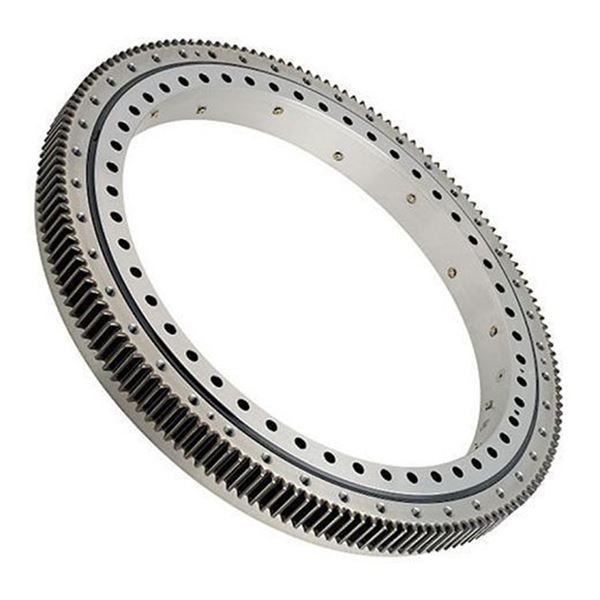
Construction equipment, such as excavators and tower cranes, uses bearings in various applications. Excavator Slewing Bearings are crucial for the rotation of the excavator's upper structure, allowing it to swing and dig efficiently. These bearings must be able to withstand high loads and provide smooth rotation, even in rough terrain.
Tower Crane Slewing Bearings are used in tower cranes to enable the rotation of the jib and the lifting of heavy loads. They must be able to handle large radial and axial loads, as well as provide precise movement for the safe and efficient operation of the crane.
Medical Equipment
In the medical field, bearings are used in various types of equipment, such as surgical tools, imaging devices, and laboratory equipment. Surgical tools, such as drills and saws, use bearings to provide smooth and precise movement, allowing surgeons to perform delicate procedures with accuracy. Imaging devices, such as MRI and CT scanners, use bearings to support the rotating components and ensure high-quality images.
Laboratory equipment, such as centrifuges and mixers, also rely on bearings to provide reliable and efficient operation. These bearings must be able to withstand high speeds and provide smooth rotation, as well as be resistant to corrosion and contamination.
Why Choose Our Bearings?
As a bearings supplier, we understand the importance of providing high-quality products that meet the specific needs of our customers. Our bearings are manufactured using the latest technology and the highest quality materials, ensuring reliability, durability, and performance.
We offer a wide range of bearings for various applications, including industrial machinery, automotive, aerospace, renewable energy, construction, and medical equipment. Our team of experts can help you select the right bearings for your specific needs and provide technical support and advice.
In addition to our high-quality products, we also offer competitive pricing and excellent customer service. We are committed to meeting the needs of our customers and providing them with the best possible solutions.

Contact Us for Your Bearing Needs
If you're in the market for high-quality bearings, we'd love to hear from you. Whether you're looking for bearings for a specific application or need help selecting the right bearings for your project, our team of experts is here to assist you.
Contact us today to discuss your bearing requirements and let us help you find the perfect solution for your needs. We look forward to working with you and providing you with the best bearings on the market.
References
- "Bearing Handbook" by SKF
- "Mechanical Design Handbook" by Joseph E. Shigley and Charles R. Mischke
- "Automotive Engineering Fundamentals" by Thomas D. Gillespie
- "Aerospace Engineering: A Design Perspective" by Daniel P. Raymer
- "Renewable Energy Systems: Design, Analysis, and Integration" by Gilbert M. Masters


