

Ensuring the concentricity of GB Slip-on Flanges and pipes is a critical aspect in various industrial applications. As a seasoned GB Slip-on Flange supplier, I understand the significance of this process and its impact on the overall performance and longevity of piping systems. In this blog, I will share some key strategies and techniques to ensure the proper concentricity of GB Slip-on Flanges and pipes.
Understanding the Importance of Concentricity
Concentricity refers to the alignment of the center of the flange with the center of the pipe. When GB Slip-on Flanges and pipes are not concentric, it can lead to a variety of issues. For instance, uneven stress distribution can occur, which may cause premature wear and tear on the flange and the pipe. This can result in leaks, reduced flow efficiency, and even system failures in extreme cases. Moreover, misaligned flanges can make the installation process more difficult and time-consuming, increasing labor costs and project timelines.
Measuring Concentricity
Before taking any corrective actions, it is essential to accurately measure the concentricity of the GB Slip-on Flange and the pipe. There are several tools available for this purpose. One of the most common methods is using a dial indicator. A dial indicator can be mounted on a fixture and placed against the inner or outer surface of the flange and the pipe. By rotating the pipe or the flange, the dial indicator can measure the variation in the distance between the two surfaces, indicating the degree of misalignment.
Another method is using a laser alignment tool. Laser alignment tools are highly accurate and can provide real-time measurements. They work by emitting a laser beam that is projected onto a target on the opposite side of the flange or the pipe. Any deviation from the centerline can be easily detected and measured using the tool's display.
Preparation Before Installation
Proper preparation is crucial to ensure the concentricity of GB Slip-on Flanges and pipes. First, it is important to inspect the flange and the pipe for any damage or defects. Any scratches, dents, or uneven surfaces can affect the alignment. If any issues are found, the flange or the pipe should be repaired or replaced before installation.
Next, clean the mating surfaces of the flange and the pipe thoroughly. Remove any dirt, grease, or debris that may prevent a proper fit. A clean surface will ensure better contact between the flange and the pipe, reducing the chances of misalignment.
It is also advisable to mark the centerlines of both the flange and the pipe. This can be done using a scribe or a center punch. By aligning these centerlines during installation, it becomes easier to achieve concentricity.
Installation Techniques
During the installation process, there are several techniques that can be employed to ensure the concentricity of GB Slip-on Flanges and pipes. One of the most important steps is to use proper alignment tools. For example, adjustable clamps can be used to hold the flange and the pipe in place while the bolts are tightened. These clamps can be adjusted to ensure that the flange and the pipe are perfectly aligned.
Another technique is to use spacer rings. Spacer rings are thin metal rings that can be placed between the flange and the pipe to compensate for any minor misalignments. They can be made of materials such as stainless steel or carbon steel and come in various thicknesses. By selecting the appropriate spacer ring, the concentricity of the flange and the pipe can be improved.
When tightening the bolts, it is important to follow the correct torque sequence. Tightening the bolts in a haphazard manner can cause the flange to warp or become misaligned. A common torque sequence is to tighten the bolts in a cross pattern, gradually increasing the torque in small increments. This ensures that the flange is evenly tightened and reduces the chances of misalignment.
Adjustment During Installation
Even with proper preparation and installation techniques, some degree of misalignment may still occur. In such cases, it is important to make adjustments during the installation process. If the misalignment is minor, it can often be corrected by loosening the bolts slightly and repositioning the flange or the pipe. Once the alignment is correct, the bolts can be tightened again.
If the misalignment is more severe, additional measures may be required. For example, shims can be used to adjust the position of the flange. Shims are thin pieces of metal or plastic that can be placed between the flange and the pipe to increase or decrease the distance between the two surfaces. By carefully selecting and placing the shims, the concentricity of the flange and the pipe can be restored.
Quality Control After Installation
After the installation is complete, it is important to perform a final quality control check to ensure the concentricity of the GB Slip-on Flange and the pipe. This can be done using the same tools and methods as described earlier. If any misalignment is detected, it should be corrected immediately.
In addition to measuring the concentricity, it is also important to check the tightness of the bolts. Loose bolts can cause the flange to shift over time, leading to misalignment. Use a torque wrench to check the torque of each bolt and ensure that it meets the specified requirements.
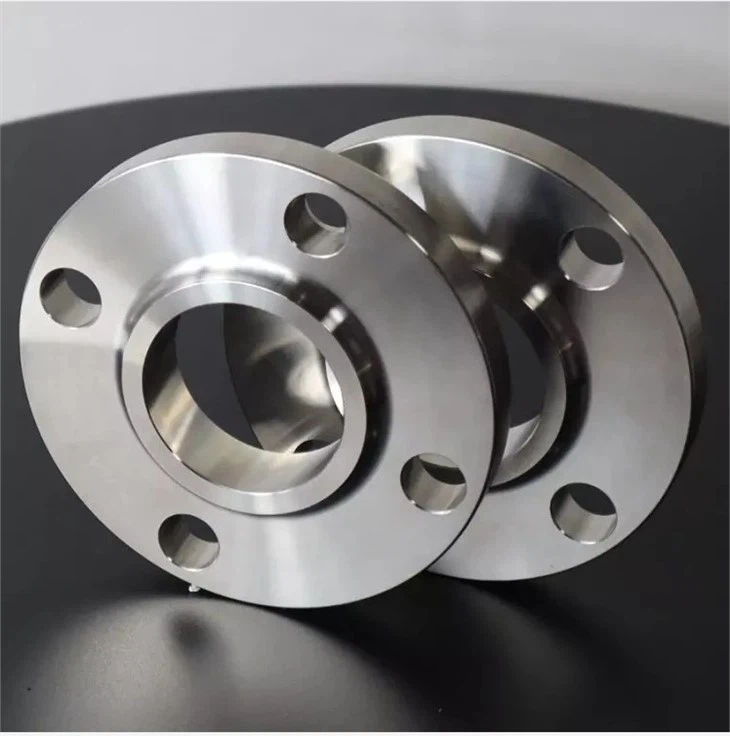

Comparing with Other Flange Types
It is worth noting that different types of flanges may have different requirements for concentricity. For example, ANSI Slip On Flange and JIS Slip On Flange may have different dimensions and tolerances compared to GB Slip-on Flanges. When working with different flange types, it is important to refer to the relevant standards and specifications to ensure the proper concentricity.
Conclusion
Ensuring the concentricity of GB Slip-on Flanges and pipes is a complex but essential process. By following the steps outlined in this blog, including proper measurement, preparation, installation techniques, adjustment, and quality control, you can significantly reduce the chances of misalignment and ensure the optimal performance of your piping system.
If you are in need of high-quality GB Slip-on Flange or have any questions about flange installation and concentricity, please feel free to contact us for further discussion and potential procurement. We are committed to providing you with the best products and services to meet your needs.
References
- "Piping Handbook" by Cameron, Neil.
- "Flange Design and Engineering" by Brown, John.
- Manufacturer's manuals for dial indicators, laser alignment tools, and other measurement devices.


