

Hey there! As a supplier of Slip On Flanges, I'm super excited to share with you how these nifty little components work. Slip On Flanges are one of the most commonly used types of flanges in the piping industry, and understanding their functionality can be really helpful for anyone involved in piping systems, whether you're an engineer, a contractor, or just someone curious about how things work.
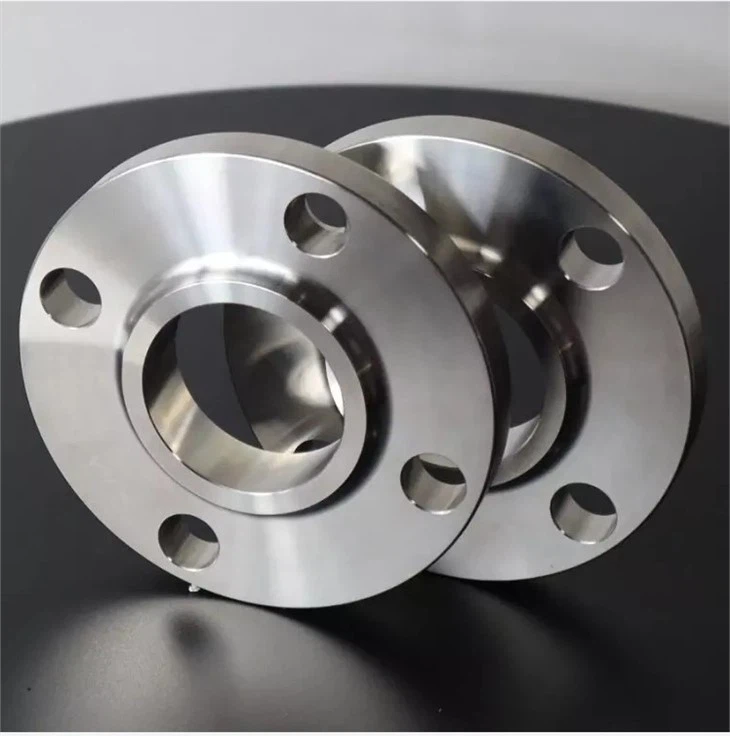
So, what exactly is a Slip On Flange? Well, it's a type of flange that slides over the end of a pipe. It has an inside diameter slightly larger than the outside diameter of the pipe it's meant to be used with. This design allows for easy installation, as you can simply slip the flange onto the pipe end and then weld it in place.
Let's start with the installation process. First off, you need to make sure the pipe is clean and free of any debris or rough edges. This is crucial because a clean surface ensures a good weld and a tight seal. Once the pipe is prepped, you take the Slip On Flange and slide it over the end of the pipe. It should fit snugly but still be able to move along the pipe easily.
After the flange is in place, you'll notice that there are two welds involved. The first weld is made on the inside of the flange, where it meets the pipe. This weld helps to secure the flange to the pipe and prevents any leakage from the inside. The second weld is made on the outside of the flange. This external weld provides additional strength and stability to the connection.
Now, let's talk about how Slip On Flanges work in a piping system. Their main function is to connect two pipes or a pipe to a valve, pump, or other equipment. They create a leak - proof joint that can withstand the pressure and flow of the fluid or gas inside the pipe.
When the system is operating, the pressure from the fluid or gas inside the pipe pushes against the walls of the pipe and the flange. The welds on the Slip On Flange hold the flange firmly in place, preventing it from coming loose. The tight fit between the flange and the pipe, along with the welds, ensures that there is no leakage.
There are different standards and specifications for Slip On Flanges. For example, we have the JIS Slip On Flange. The JIS (Japanese Industrial Standards) Slip On Flanges are designed according to Japanese requirements. They are known for their high - quality manufacturing and precision. These flanges are often used in industries in Japan and other countries that follow Japanese standards.
Then, there are the DIN Slip On Flange. DIN stands for Deutsches Institut für Normung, which is the German Institute for Standardization. DIN Slip On Flanges are widely used in Europe and other parts of the world. They are known for their durability and strict adherence to quality standards.
And of course, we can't forget the ANSI Slip On Flange. ANSI (American National Standards Institute) Slip On Flanges are commonly used in the United States and other countries that follow American standards. They are designed to meet the specific requirements of the American market and are known for their reliability.
One of the great things about Slip On Flanges is their versatility. They can be used in a wide range of applications, from small - scale plumbing systems in residential buildings to large - scale industrial piping systems in oil refineries, chemical plants, and power generation facilities.
In a residential plumbing system, Slip On Flanges might be used to connect pipes in a water supply or drainage system. They are easy to install, which makes them a popular choice for plumbers. In an industrial setting, they are used in high - pressure and high - temperature applications. For example, in an oil refinery, Slip On Flanges are used to connect pipes that carry crude oil, refined products, and various chemicals.
Another advantage of Slip On Flanges is that they are relatively inexpensive compared to some other types of flanges. Their simple design and easy installation process mean that less labor and fewer materials are required. This makes them a cost - effective solution for many projects.
However, like any product, Slip On Flanges also have some limitations. They are not as strong as some other types of flanges, such as Weld Neck Flanges. In very high - pressure or high - temperature applications, the welds on a Slip On Flange might be more prone to failure. So, it's important to choose the right type of flange based on the specific requirements of your project.
When selecting a Slip On Flange, you need to consider several factors. The first is the size of the pipe. The flange must have the correct inside diameter to fit the pipe. You also need to consider the pressure rating of the flange. This is the maximum pressure that the flange can withstand without failing. The material of the flange is also crucial. Common materials include carbon steel, stainless steel, and alloy steel. The choice of material depends on the type of fluid or gas in the pipe, the temperature, and the corrosiveness of the environment.
So, if you're in the market for Slip On Flanges, whether it's for a small - scale project or a large - scale industrial application, we've got you covered. Our Slip On Flanges are manufactured to the highest standards, ensuring quality and reliability. We offer a wide range of sizes, materials, and standards, including JIS, DIN, and ANSI.

If you're interested in purchasing Slip On Flanges or have any questions about how they work in your specific application, don't hesitate to reach out. We're here to help you make the right choice for your project.
References
- "Piping Handbook" by Cameron Engineering and Associates
- "Flange Design and Engineering" by various industry experts


